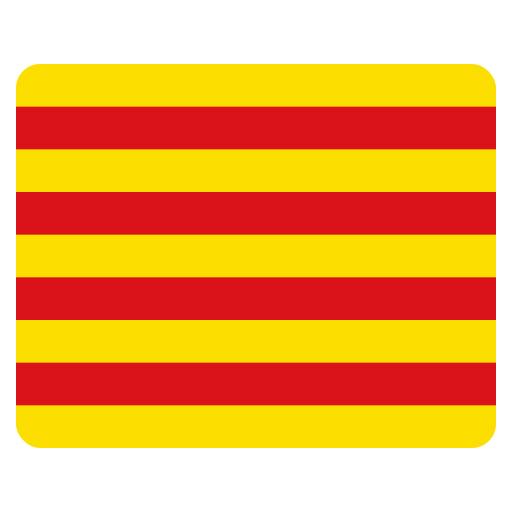
Catalan is a Romance language and the only official language of Andorra.
| Part | Easier for English Speakers | Takes Practice |
|---|---|---|
| Words | Many words from Latin look like English ones, such as and (unit). | Every noun is masculine or feminine, and often for no clear reason: a stool, , is masculine. |
| The past | The usual past for finished events uses a helper, so you only need the verb's basic form: (Anna paid). | The helper changes with the person: , , , , and . |
| “The” | The word for “the” is or , and it usually shortens to before a vowel, as in (the grandfather). | Names take “the” too, so Anna is , and some speakers say for Joan. |
| Regions | People from different Catalan-speaking regions understand each other very well, by estimates of 90% to 95%. | In the east, an unstressed and e sound the same, while western speakers keep them apart. |
To plan your study, read the fastest way to learn Catalan.
- Level 1
I'm just starting out or know only a few words.
Questions about prices come first, like (How much is a tea and a croissant?) in the lesson below.
- Level 2
I can handle simple exchanges.
Chats about your weekend bring in the past, so watch the helper change from (I) to (we).
- Level 3
I follow conversations on familiar topics.
Small pronouns start to stack up, as in (they recommended me to him), so read the whole group as one piece.
- Level 4
I understand most content but miss some nuance.
Regional speech starts to matter: in western Catalonia, many people say for “the” where others say .
- Level 5
I read complex topics but rare words slow me down.
Formal topics bring in longer words, so save the ones you meet twice.
- Level 6
I can read almost anything.
Here you meet song lyrics full of local words.
Pagant a la cafeteria
Level 1Anna pays at the cafeteria.
How much is a tea and a croissant?
It is three euros.
Here you have a coin.
This lesson comes from Bubblegum, where Poppy, your AI tutor, writes Catalan lessons for each level.
To start with the basics, read the easiest way to learn Catalan.
Bubblegum
For serious learners, Bubblegum is the best app to learn Catalan. You learn from Catalan you can mostly understand, which is called comprehensible input.
With Regenerative Review™, words you save show up again in new lessons, so that you can review words in new contexts without having to use flashcards.


- Every lesson is written at your level, about things you like.
- Read and listen to news and stories in Catalan about things you care about.
- Ask Poppy about a sentence while you read.
- Regenerative Review™ brings saved words back in new lessons, and you can export them to Anki as flashcards.
- Clear, expressive AI voices read every lesson aloud, with a different voice for each speaker.
- You can't turn Catalan novels you own into lessons. However, you can paste a passage in the chat, and Poppy will tell you what it means.
- Custom lessons cost us money to make, so you need Bubblegum Pro for unlimited custom lessons. Lessons Poppy wrote for other learners are free for everyone to read.
- Regenerative Review™
Mobile
Are Catalan Words Closer to Spanish or Italian?
By one count, slightly closer to Italian: 87% of words are similar, against 85% for Spanish and Portuguese.
Is Bubblegum Free?
Yes. Lessons Poppy wrote for other learners are free for everyone to read. Custom lessons cost us money to make, so you need Bubblegum Pro for unlimited custom lessons.
Sources
- Wikipedia: Catalan language (Romance language; sole official language of Andorra; unstressed a and e merge in Eastern dialects but stay distinct in Western ones; mutual intelligibility between dialects estimated at 90% to 95%; Ethnologue lexical similarity 87% with Italian, 85% with Portuguese and Spanish)
- Wikipedia: Catalan grammar (el and la, l' before a vowel except unstressed i or u, l'avi; articles with personal names, el Joan or en Joan; lo and los in Western Catalonia; arbitrary gender, tamboret; the idea, hipòtesi and unitat examples; 13 unstressed pronoun forms and 65 combinations, m'hi recomanaren; past tense with vaig, vas, va, vam, vau, van and the infinitive)
