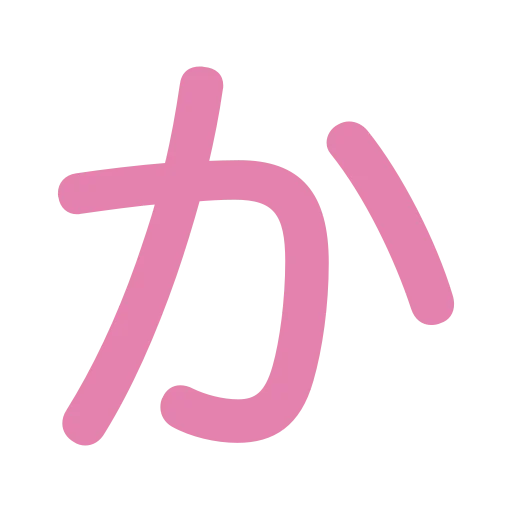
is the round set of Japanese letters, and is the pointy one. They spell the same sounds, but katakana is the one you will see in borrowed words like , which means coffee.
and カ sound exactly the same, but each set has its own job. Japanese writing mixes both of them with kanji, the characters that carry a word's meaning.
| Shape | Round, with curved strokes, like | Pointy, with short straight strokes, like ア |
| What it writes | Verb and adjective endings, small grammar words, and everyday words with no common kanji | Words from other languages, foreign names, sound effects, and words written for emphasis |
| A long vowel | An extra vowel letter, so (aunt) becomes (grandmother) | A bar, so (building) becomes (beer) |
| Where it came from | A whole Chinese character written fast, like from 安 | One part of a Chinese character, like カ from the left side of 加 |
| Basic letters | 46 | 46 |
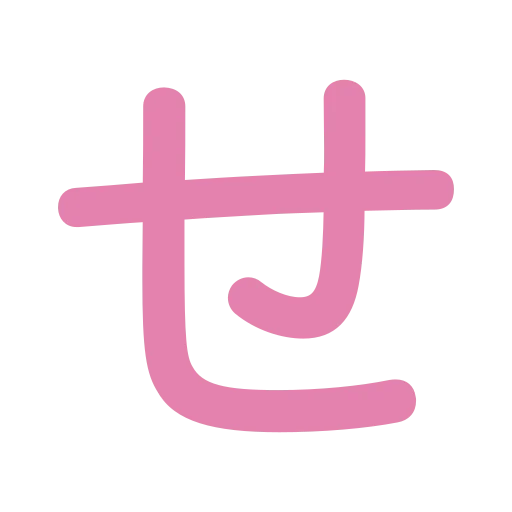
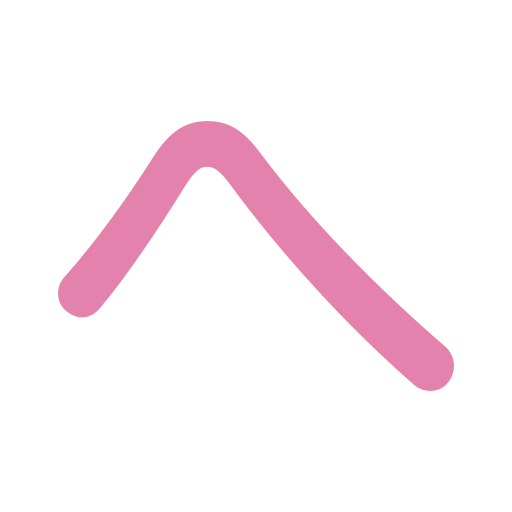
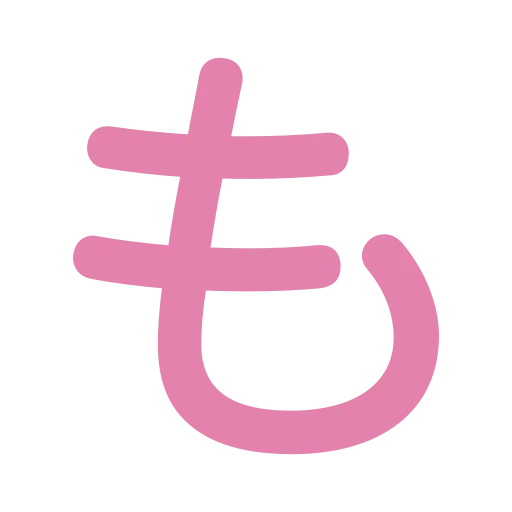
Nine katakana are near copies of their hiragana. Each pair grew from the same Chinese character, and in these nine, the two shapes still match.
| Sound | Both Came From | ||
|---|---|---|---|
| カ | ka | 加 | |
| セ | se | 世 | |
| ヘ | he | 部 | |
| り | リ | ri | 利 |
| モ | mo | 毛 | |
| ヤ | ya | 也 | |
| う | ウ | u | 宇 |
| ラ | ra | 良 | |
| め | メ | me | 女 |
- シshiツtsuソsoンnThe long stroke tells them apart. It sweeps up in シ and ン, and comes down in ツ and ソ, the same way it moves in , , そ and .
- コkoロroコ is open on the left side. ロ closes into a full square.
- ウuフfuワwaフ is one hook with nothing on top. ワ adds a short line on the left, and ウ adds a tick on top too.
- クkuタtaタ is ク with one more short line inside it.
- ニniミmiニ has two flat lines. ミ has three slanted ones.
Katakana uses so few strokes that several letters differ by one line or one angle.
Start with hiragana. Verb endings and little words like particles are written in it, so you need it to read almost any line of Japanese. Katakana comes easier after that, because you already know its sounds and nine of its letters are the twins above.
Some teachers start with katakana instead, because a beginner can practice on borrowed words they already know. The courses on this site run hiragana first, then katakana, then Kanji Basics.
Free Hiragana Course
- Audio for Every Letter
- Spaced Repetition Review
- Real Example Words
 Download Bubblegum


0 of 14 Chapters Complete
Free Katakana Course
- Audio for Every Letter
- Spaced Repetition Review
- Real Example Words
0 of 10 Chapters Complete
Each script has its own picture chart, where every letter is drawn as something whose name starts with its sound. Start with the hiragana chart, then use the katakana chart, which keeps the pictures for most twin pairs. The hiragana and katakana courses use the same pictures for those twins too.
After that, Poppy, your AI tutor in the Bubblegum language app, writes Japanese lessons at your level.
Can the Same Word Be Written in Both?
Yes. A manga may write a robot's or a foreigner's hello as in katakana, where the usual spelling is in hiragana.
Do You Need Kanji Too?
Yes, for everyday reading. Learn kana first, because small hiragana called furigana often sit above a kanji to show how to read it.
Is Bubblegum Free?
Yes. Lessons Poppy wrote for other learners are free for everyone to read. Custom lessons cost us money to make, so you need Bubblegum Pro for unlimited custom lessons.
Sources
- Wikipedia, Hiragana (verb and adjective endings, particles, furigana; each letter a cursive form of a whole Chinese character, like あ from 安)
- Wikipedia, Katakana (loanwords, foreign names, sound effects, emphasis; made from parts of characters, like カ from the left side of 加; teachers differ on which kana to teach first)
- sci.lang.japan FAQ, How did katakana and hiragana originate? (the parent character of every hiragana and katakana)
